
Shuttle Cart Racking
Shuttle Cart Racking Systems for Canadian Warehouses
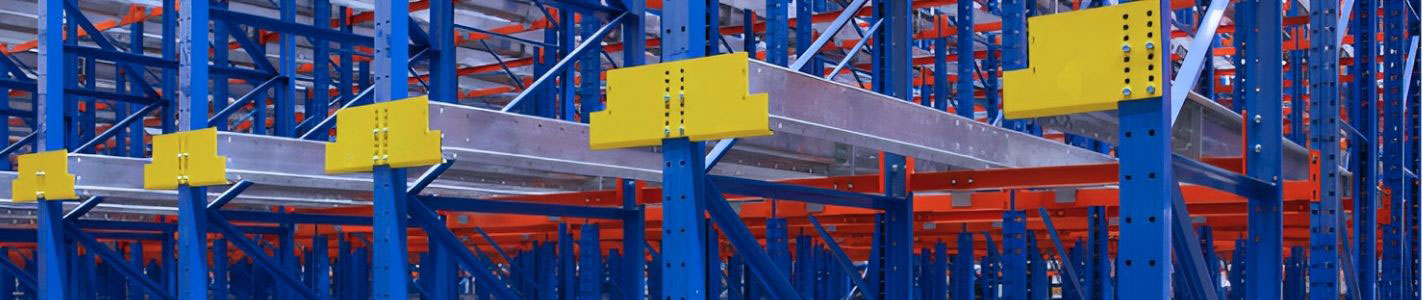
The Shuttle Cart Racking system uses a motorized shuttle to transport pallets along tracks in storage lanes. Pallets are placed at the lane entry, and the shuttle moves them to an available position. For retrieval, it brings the pallet back to the entry. This automation allows for deeper storage lanes and better space utilization, increasing efficiency and safety.
Key Features & Benefits
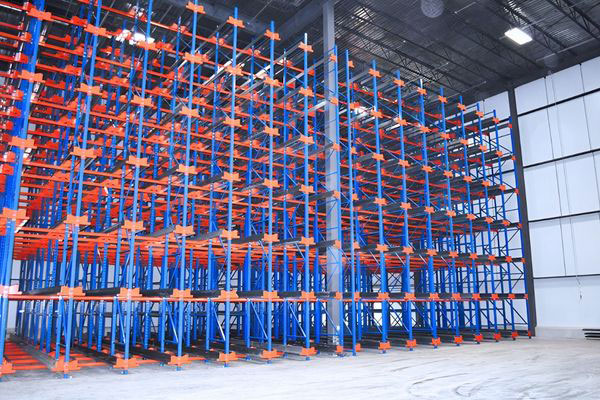
- Semi-automated Shuttle Cart transports items into pallet racking, optimizing space usage.
- Ideal for warehouses with fewer SKUs and high throughput for uninterrupted order picking.
- Enables increased racking depth and height, utilizing every square inch of storage space.
- Supports both FIFO (First-In, First-Out) and LIFO (Last-In, First-Out) storage methods.
- Reduces manpower and resources needed, enhancing operational safety and productivity.

Built for High Throughput and Safety
Shuttle Cart Racking excels in warehouses with high throughput and a limited range of SKUs, streamlining order-picking and minimizing physical handling to boost operational speed. Because pallets are handled automatically, forklift traffic within the lanes is greatly reduced, cutting manual labor and significantly enhancing warehouse safety alongside productivity.
Optimizing Space in Cold Storage and Beyond
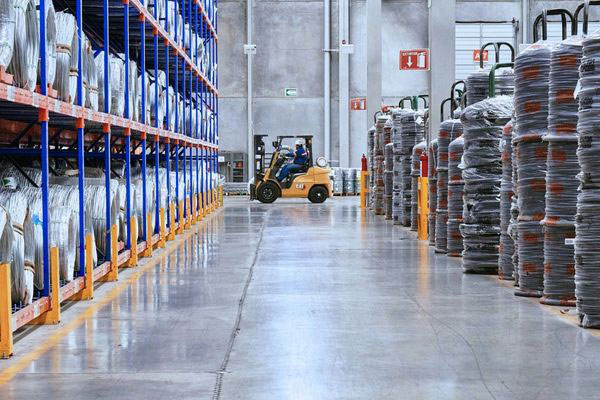
The Shuttle Cart system's design allows for significant increases in racking depth and height, adapting to both FIFO and LIFO inventory strategies for flexible, efficient use of space. It's especially effective in cold storage and freezer environments, where reducing the time pallets spend in transit helps maintain product integrity while enhancing both safety and productivity.
Versatile for Diverse Warehouse Needs
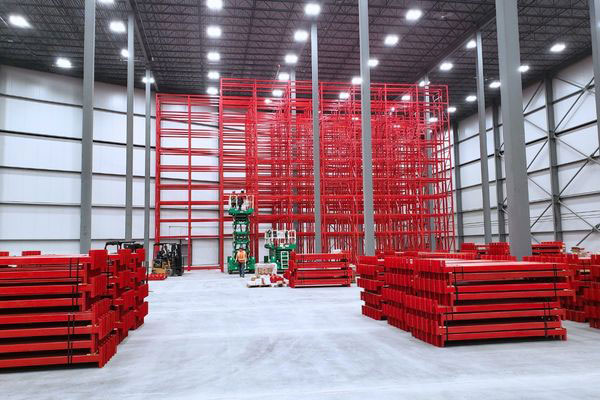
Whether it's a new installation or a reconfiguration, the Shuttle Cart system offers unparalleled adaptability, working efficiently regardless of the number of lanes or their depth, making it a scalable solution for diverse storage environments.
Shuttle Cart Racking, Installed Across Canada
From Ontario to Alberta and beyond, NAS Group designs, manufactures, and installs Shuttle Cart Racking systems built for the demands of Canadian warehouses. Our in-house engineering and installation teams work directly with your operation to configure a system suited to your space, throughput, and rotation needs, backed by coast-to-coast service and support.
See Areas We Serve